
Buy a pack of cigarettes anywhere in the United States and many other countries, and you know what's inside without opening it; the pack usually contains 20 cigarettes. Then ask the same question in Australia or China, or in a duty-free shop at the airport and the number of cigarettes in a pack varies. So why does a pack usually contain 20 cigarettes? And why does the quantity of cigarettes change depending on where you're standing?
Well, that's two questions in one. The first is consumer behavior, where they came to expect a certain number of cigarettes in a box. The second one is packing of cigarettes, and that is what really counts if you are a brand owner, retailer or a custom cigarette boxes. If you miss one of the specifications, you've got it all wrong and the whole dieline collapses. Let's dive into both and discuss the number of packs in a carton, the various kinds of cigarette packaging, and what really justifies the regulation of cigarette pack size, which influences pack size and price for cigarettes?
Why Has Cigarette Packaging Changed Over Time?
Plain cigarette boxes such as those commonly found today, have a fascinating history that dates back to the 19th century. The cigarette brands of those days did not have a proper cigarette packaging system and had no standardised packaging. Instead, they sold cigarettes in bulk, wrapped with very basic materials such as paper or tin foil. These are old packaging techniques and they demonstrate the contrast between them and the current standard packaging.
Over the years packaging has come a long way, one of the early packages being the cigarette card. These cards were enclosed in packs containing pictures of celebrities, sports stars and other popular people. In the early 20th century, brands began to experiment with packaging using other materials and creative designs to make it more attractive and convenient for the consumers. At this period the standard cigarette pack design was adopted.
In 2026, the packaging of cigarettes will be affected by many different factors, including government regulations and public health policies. Many countries have very strict laws when it comes to cigarette packaging. They require health warnings to be printed on cigarette boxes. Not only this, but tobacco companies also have to follow standardised designs of cigarette packaging in some regions of the world.
These regulations are part of global tobacco control efforts under the WHO Framework Convention on Tobacco Control (FCTC). Its main goal is to prevent people from being encouraged to try smoking and to reduce the overall smoking percentage. The purpose of these rules is to make health warnings clearly visible for better public health outcomes. Many countries have a requirement of 50% or higher packing with warnings, and some countries mandate 80% or more of the packaging. This worldwide campaign is now in place in more than 110 countries with graphic health warnings on cigarette packs. WHO estimates that 20-21% of the world's adult population is currently using tobacco products and the prevalence of tobacco use has been steadily decreasing over the last decade.
The Short Answer: 20 Is Standard, But Not Universal
A standard pack of cigarette has 20 cigarettes in it in many European countries, with the same pack size also seeming to be the norm in China and Japan. It's not a rule of nature, but a practice that the whole industry has adopted. So, if you are wondering how many cigarettes are in a pack in your country, the straight answer is, it depends on where you ask.
They're different in Australia, where packs typically contain 25-30 cigarettes. There's also a pack of less than 20 cigarettes, primarily for people who are casual smokers or travelers who don't want to have 20 in their pocket, although many countries have begun to limit the availability of those smaller, less expensive packs partly because packs containing fewer cigarettes can be an easier and cheaper way of introducing new smokers.
All this is not random. The single pack can differ greatly depending on where it is bought and is a combination of tax policy, manufacturers standardized the pack size, and a good measure of marketing psychology.
|
Country/Region |
Common Pack Size |
Notes |
|
United States |
20 |
Legal minimum, federally set |
|
Canada |
20 or 25 |
Both formats are widely sold |
|
Australia |
25–30 |
20 exists as the legal minimum |
|
United Kingdom |
20 |
Only legal format since 2017 |
|
Ireland |
20 (also 27, 33) |
20 most common |
|
European Union (general) |
19–21 |
Varies slightly by country/brand |
|
China / Japan |
20 |
Consistent standard |
|
Malaysia |
20+ |
Packs under 20 are banned |
Impact of Cigarette Box Dimensions on Brand
When it comes to creating a brand reputation, the right cigarette size is quite important. Consider these dimensions to boost customer experience, so they can easily carry them in their pockets or bags.
The standard cigarette pack is about 3.35 x 2.20 x 0.87 inches, with a footprint that will accommodate up to 30 cigarettes depending on the diameter of the cigarette sticks. Hence, the 20-count pack might have just a bit of space on the inside; the box is designed around the top end of the pack size, rather than around 20 sticks. It is in setting this dimension from the get-go that a brand can maintain its packaging's premium appearance while also ensuring there is no air left inside.
Why 20 Became the Number Everyone Expects
Step back long enough and cigarettes didn't exist as they do now. In early days, tobacco was sold without any brand, and plain paper was used to wrap it without any standard count. A far cry from the custom Printing Products brands rely on today. The introduction of a fixed 20-stick pack occurred over time in the early 20th century, rather than through regulation, and was due to commercial success. As manufacturers came to understand that their customers were not interested in considering the size of the pack, but simply wanted to know how many cigarettes were in an average pack, they standardized the size.
Twenty found themselves in an unusual sweet spot. It is small enough to fit in a shirt pocket, about the amount a moderate smoker would consume over the course of a day, and it will easily split up for selling. After a few big brands adopted the 20-pack, the rest did the same just to 'catch up,' turning what started as plain wrapping into recognizable Luxury Packaging Boxes, well before policy was shaped around the number of cigarettes that were already there. That's also about the time 20 cigarettes a pack went from a marketing decision to a presumed default for all cigarette brands.
There's another manufacturing factor that's rarely discussed. Initial cigarette-making machinery was designed with a particular number of cigarettes in a pack, and if a factory switched to a new number, it had to retool the entire production line — much like how switching pack formats today still means redesigning Printing Products and structural dielines from scratch. It's a costly option for a company that is already earning revenue from the existing model. Indeed, some of the first packs had fewer cigarettes than later became customary — as few as 10 or 12 — until the cigarette-making process and consumer habit drove this up and set it. Thus, the figure did not stay in place due to customer preference. Sticking with it was more convenient because altering it would have been a real cost to manufacturers with little gain.
Cartons, Packs, and the Math Behind Both
Look through the numbers and it won't take long: 20 sticks in a pack, 10 packs per carton, and 200 total cigarettes per carton. For the person who isn't taking advantage of a calculator to work out how many packs are in a carton he/she is buying, this is all that needs to know. However, there are a few differences to be familiar with before you think all cigarette cartons are created equal:
- Mini cartons have fifty cigarettes come in smaller packages, which are intended for lighter buyers or travel-sized purchases, making cigarettes still more accessible.
- Slim cartons are smaller packs to fit narrower footprints, as would be a 10 pack.
- Sometimes larger counts occur with cigarettes in bulk or specialty cartons when buying wholesale-sized boxes of cigarettes, but this remains rare outside a wholesale setting.
The number of cuvettes in a carton can be as critical as the number of cuvettes in a pack when they are to be shipped or for retail display. If any number on a packaging order is absent, the box of cigarettes will literally fall apart.
It's Not Just About the Count, It's About the Stick Itself
The one part of almost no one selling packaging that people don't explain clearly, and that is the part that is confusing to new brand owners the most: two packs can have 20 cigarettes in each box, and two different box dimensions.
Regular cigarettes are approximately 70mm long, King size is about 84mm long, 100s are about 100mm long and 120s are the longest common ones on the market at 120mm.
Slim cigarettes also stay longer in the 100mm range, but become narrower, altering the shape of the smoke cavity within the cigarette while keeping the number of sticks on the label the same.
So a “20-count pack” is not actually a 20-count. There are at least four different sets of pack dimensions, depending on the stick format you are packaging.
|
Stick Format |
Approx. Length |
Diameter |
Common Use |
|
Regular |
70mm |
Standard |
Older/less common format now |
|
King-Size |
84mm |
Standard |
Most common US format |
|
100s |
100mm |
Standard |
Popular long-format option |
|
120s |
120mm |
Standard |
Longest common format |
|
Slims |
~100mm |
Narrower |
Thinner diameter, same length range as 100s |
That's why a packaging buyer can't simply state, “I want a box that will hold 20 cigarettes,” and get the price per. The count responds to one question. The stick length and diameter are different questions, and both must be set before cutting the dieline. Add the health warning space regulators mandate (30% to 50% or more of the front and back panels, depending on the country,) and you get a spec sheet that bears little resemblance to the simple number most people think is the whole story.
Hard Pack vs. Soft Pack: Does the Style Change the Count?
That makes all the other attributes of those 20 sticks very different for the day, and a significant factor in the difference between one kind of cigarette packaging and another.
Soft packs are thin, flexible paper that typically has a foil lining on the inside and are meant to be affordable rather than protective. There is little resistance to crushing, they are inexpensive and easy to carry and most soft packs usually contain 10 cigarettes or 20 cigarettes per packet, depending on the brand. The complaints you'll hear about a pack's ability to guard against breakage in cigarettes will be most common in this format.

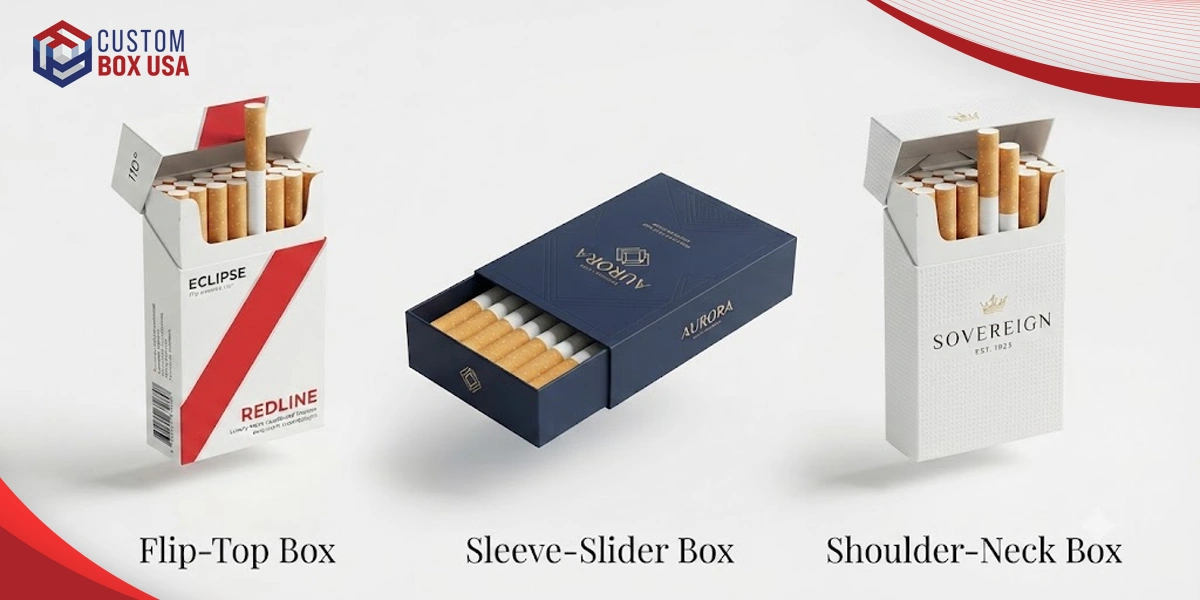
Hard packs are also known as flip-top boxes and are made of stiff cardboard that will retain its shape much longer when under pressure. In 1955, Philip Morris developed the flip-top hard pack specifically to avoid cigarette crumpling in a pocket or handbag , and most high quality and mid-range brands still prefer this form for that reason and the added branding possibilities.
Slide packs are similar to a small drawer, but contain an inner tray that slides out from an outer sleeve. Less common, but more popular among a few brands looking for a higher-end unboxing experience. A slide pack, as it is known today, evolved from design experiments that were to make it easier to get single cigarettes without opening the entire pack.
Slim pack boxes are also worthy of mention, as they are designed around the smaller format of "slim" cigarettes and not a small version of a regular pack. The internal tray is not as thin as you may think, since many first time packaging buyers confuse this.
Most markets have a stick count of 20 for all three main styles. Even if the number of cigarettes doesn't affect the product, the perception of durability, branding and cost of the unit are huge concerns to a brand owner.
|
Pack Style |
Material |
Durability |
Branding Space |
Typical Cost |
|
Soft Pack |
Thin paper/foil |
Low, crushes easily |
Limited |
Lowest |
|
Hard Pack (Flip-Top) |
Rigid cardboard |
High, resists crushing |
Most, front/back/lid |
Mid-range |
|
Slide Pack |
Rigid cardboard |
High |
Moderate |
Highest |
Materials That Actually Hold Up in Cigarette Packaging
The box is made by Dimensions. Depending on the material used, the surface can be sat on or not. However, when the size is fixed, the pack still looks nice after a day in somebody's back pocket.
Hard pack production is mostly cardboard and rigid stock due to its resistance to crushing and ability to keep its shape when handled in a pocket. Similar to custom rigid boxes these materials provide exceptional durability while offering a premium appearance. This is the same material that will have the branding most, as it will accept stamping, embossing, and spot UV well, where thin paper will not.
The outer wrapping can be of any variety, but the foil lining is packed under practically every pack, to protect it from moisture and to preserve freshness until the time of opening. This little detail serves a purpose but it's not something you'll see, and it's quite significant.
Brands looking for a balance between cost and durability will typically opt for hard pack cardboard construction for its shelf presence and durability, while soft pack paper is ideal for markets with high volume and low price per pack sensitivity. No one is right or wrong. It is completely subjective as to where it is placed and who it is aimed at.
Why Regulations Shape the Number More Than Demand Does
Many countries have established a minimum legal pack size, and a pack of about 20 cigarettes is the norm, which is so small that they are easier to obtain by younger or less price-conscious consumers.
The results have been consistent across different regulators, and they've shown that packs with 10 or fewer cigarettes are affordable enough to affect the number of packs selected by budget-conscious first-time smokers, the very group most tobacco control policy aims to prevent from taking up smoking.
Not to mention the amount of space that most regulations call for on the pack for health warnings, often taking up a large portion of the pack or even half of the panel, which directly affects the creativity that a brand can come up with for the pack layout, no matter how many sticks are used inside.
But it's not just tax structure, either, and it's rather quirky: In some markets, a few unusual counts have been tried to land on a more affordable tax bracket. Then a single cigarette goes by and all the numbers on the tax form change.
What This Means If You're Sourcing Custom Cigarette Packaging
If you're a brand owner or a retailer seeking packaging solutions, here's the bottom line in all of this: end your packaging discussions with "20 cigarettes. This number is of little value by itself to your supplier. Use the stick format (regular, king-size, 100s or slim), pack format (soft, hard or slide) and regulatory warning space you need in your target market first. It's easy to count. It's the other three that derail a first order in a stealth way and they're the very details that impact on how many cigarettes a supplier can fit in a dieline without wasting board.
Standard Cigarette Pack Sizes In Different Countries of the World
In the United States, 20 cigarettes per pack are common. Below is the table that describes how many cigarettes are packed in a box:
|
Brand |
Typical Pack Count |
Size Variations |
|
Marlboro (Red, Gold, Smooth) |
20 |
King Size (84-85mm), 100s, 72s |
|
Camel |
20 |
King Size, 100s |
|
Newport |
20 |
King Size, 100s |
|
American Spirit |
20 |
King Size (Standard) |
|
Winston |
20 |
King Size, 100s |
|
Kool |
20 |
King Size, 100s |
|
Pall Mall |
20 |
King Size, 100s |
|
Basic |
20 |
King Size, 100s |
Still Wondering How Many Cigarettes Are in Your Pack?
If you have read this far, you already know more about the size of the cigarette pack that most people buy. A pack of 20 cigarettes per pack became a day habit without giving the matter a second thought. The short answer is that most of the time, the pack has 20 cigarettes, the carton will be 10 packs, and any number beyond 20, stick style, warning space, is where the real packaging decisions are made.
Cost of Cigarettes in a Pack
Understanding how many cigarettes are packed inside a pack also helps you calculate the exact price of each cigarette. For instance, the average price of a cigarette packet is around US$ 8. It means that a pack of 20 will cost you US$0.40 per cigarette. The cost of cigarettes is determined by various factors such as the expenses of production, the quality of cigarettes, and government taxes.
When it comes to production, raw material, labor cost, packaging cost and shipping prices are major determinants of price. The quality of raw materials also comes in a range of prices. Government taxes are mainly applied to cigarette packs to discourage such a hazardous habit.
Economic and Marketing Considerations for Cigarette Packaging
Economic factors like manufacturing costs and taxes, as well as consumer taste, affect the number of cigarettes in a box. Larger packs may be more popular due to the cost savings, and smaller packs may be more popular due to the appeal of a smaller number of cigarettes.
- Production Costs: The number of cigarettes packed together depends on the cost of production, which involves materials and manpower. If you're thinking about purchasing in bulk, bigger cartons may be more economical.
- Taxes: Cigarette taxes are frequently imposed per pack and can have an effect on pack size decisions made by manufacturers. A bigger pack size may seem more desirable if per cigarette pricing is reduced because of the way the taxes are applied.
Consumer Preferences: Individual smoking habits and preferences play a role. Some smokers want to buy big packs for convenience, while others want to buy smaller packs to help them control their smoking or for the budget.
Where to Buy Cigarette Packaging Boxes?
Looking for a custom cigarette box partner that can make your cigarette boxes wholesale? Custom Box USA was designed for you! No first order will have to suffer from the above-sized pharma packaging issues, as we provide quality packaging solutions with competitive pricing, and are fully customizable for stick format, pack style and regulatory warning space. Get a quote and receive packaging that is custom-designed to your needs.
FAQ's
How many cigarettes come in a standard pack?
The US, Canada and a lot of markets have standardized at 20 cigarettes per pack.
How many cigarettes are in a carton?
Each carton contains 10 packs, or 200 cigarettes. Rather, mini cartons contain 5 packs.
Why does Australia have more cigarettes per pack?
Australian packs normally contain 25 to 30 cigarettes per pack, depending on the regulatory and market requirements, rather than the 20 count used in the U.S.Unlike the U.S. packs, Australian packs typically contain 25-30 cigarettes because of the different regulatory and market standards.
Does the style of the pack make a difference on how many cigarettes fit inside?
However, the soft packs, hard packs, and slide packs all provide different "protection" and "shape" for the same 20 sticks.
Why are box sizes different for king-size and 100s cigarettes when they have the same number of cigarettes?
The length of the stick, the width of the cigarette and the diameter of the cigarette in the pack determine the internal cavity for a pack, so a 20-count pack of king-size cigarettes requires a different internal cavity than a 20-count pack of regular sticks.
What should I know before ordering custom cigarette boxes?
In addition to the stick count, you will need to define stick format, pack style and the health warning space you will need for your target market before a dieline can be completed.