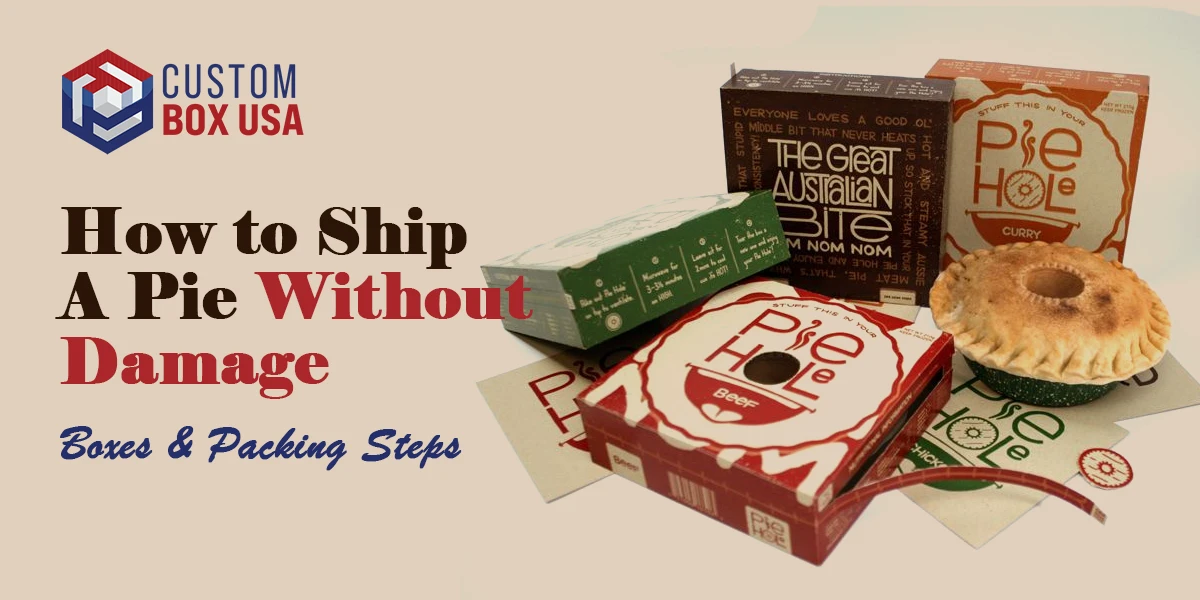
How do you ship a pie so it arrives in one piece? Freeze it solid, set it in a snug pie box, and pack that box inside a bigger corrugated shipping box with padding and cold packs. Then send it with a fast service early in the week. Do that, and your pie has a good chance of arriving whole, cold and ready to eat.
Below you'll see which pies travel well, which pie shipping boxes to use and how to pack each layer. You'll also get the 2026 holiday dates to plan around. We make food, bakery and gift packaging at Custom Box USA, so we'll point out where a better-fitting box makes a real difference.
| Stage | What you need | Time | Result |
|---|---|---|---|
| Prep | A fruit, nut or pumpkin pie in an aluminum tin, plastic wrap, a freezer | Overnight, until frozen all the way through | A firm pie that won't slide, crack or sweat |
| Pack | A pie box, a cardboard round, a corrugated shipping box, padding, cold packs, wide tape | Right before pickup, so the pie stays frozen | A box where nothing moves |
| Ship | Overnight or the quickest service you can get | Early in the week | Less time in a warm truck or a closed depot |
| Arrival | A short note for the person who receives it | As soon as the box arrives | The pie goes straight into the fridge or freezer |
Can You Ship a Pie? The Short Answer
Yes, you can ship a pie, as long as it's frozen, boxed twice and sent fast. Carriers accept baked goods, but they expect you to pack them so they don't spoil on the way.
Yes, if it's frozen, boxed twice and shipped fast
A pie faces two problems in the mail: movement and heat. Movement cracks the crust and smears the filling, while heat softens the pie and gives bacteria time to grow. Freezing solves most of the heat problem. Double-boxing, which means a small pie box inside a bigger shipping box with padding between them, solves most of the movement problem.
What carriers say, in plain words
The FedEx guide to shipping perishables says cakes, pies and similar baked goods should ship frozen. Cookies and other shelf-stable baked goods can travel without cold packs. So a pie needs more care than a tin of cookies.
USPS has its own food rules in USPS Publication 52, Fresh Foods and Other Perishables. In short, food that can't reach its destination without spoiling is not mailable, and packaging must be strong and well sealed. A frozen, well-packed pie on a fast service fits those rules. A warm cream pie on a slow service doesn't.
Which Pies Ship Well (and Which Don't)?
Fruit and nut pies ship best because they're firm and hold their shape. Cream, custard and meringue pies are soft, and they spoil fast once they warm up.
| Pie type | Ships well? | Why |
|---|---|---|
| Apple, cherry, berry and other fruit pies | Yes | Thick filling and a sturdy crust. They freeze well and don't slosh. |
| Pecan and other nut pies | Yes | Dense and firm. The top doesn't dent easily. |
| Pumpkin and sweet potato pies | Yes, if frozen and sent fast | They hold their shape when frozen. Keep them cold the whole way. |
| Custard pies | Not a good idea | Soft, egg-and-milk filling that needs steady cold to stay safe. |
| Cream pies (banana cream, coconut cream) | Avoid | Dairy-heavy filling that spoils quickly and collapses when it warms. |
| Meringue pies and pies with fresh whipped topping | Avoid | The topping crushes, weeps and slides. Add it after arrival instead. |
Our honest opinion? If the pie is a gift, send apple or pecan. They're the safest choices for the mail. Save the lemon meringue for local pickup.
Pick a sturdy pan
Bake in a disposable aluminum pie tin, not glass or ceramic. Aluminum is light and won't shatter if the box gets dropped. A broken glass dish ruins the pie and leaves sharp pieces in the food.
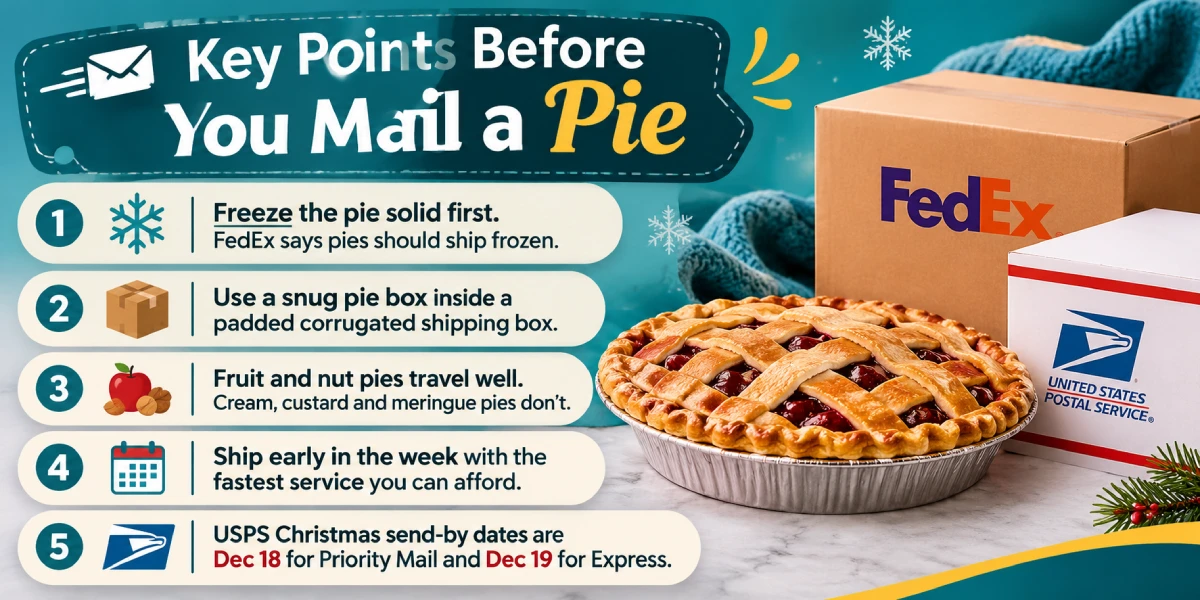
Key Points Before You Mail a Pie
What Box Do You Use to Ship a Pie?
Use two boxes: a pie box that fits closely, and a stronger corrugated box around it. The pie box keeps the pie flat and still, and the outer box takes the bumps.
The inner pie box and the outer shipper
Your inner box can be a plain cardboard pie box or a printed bakery pie box. It should leave only a little room around the tin, so the pie can't slide. Our custom pie boxes are made to the size you give us, which is the easiest way to get that close fit.
The outer box should be corrugated. Corrugated cardboard has a wavy paper layer inside its walls, and those waves soak up bumps. The most common shipping style is an RSC (regular slotted container): the plain box with top and bottom flaps that meet in the middle. You can order custom corrugated boxes sized to hold your pie box plus padding.
Cushioning and fill
- Bubble wrap: plastic sheets with air pockets that cushion the box.
- Loose fill or packing peanuts: small foam or paper pieces that fill empty space.
- Crumpled kraft paper: easy to find and easy to recycle.
- Molded paper inserts: paper shaped to fit around the item so it sits snugly.
Cold packs or dry ice
Gel packs are sealed packs you freeze ahead of time, and they're the easiest choice for most people. Dry ice (frozen carbon dioxide) is much colder, but it needs gloves, careful handling and special carrier rules. You'll also want an insulated container, such as a foam box that slows heat getting in, plus a watertight liner. FedEx lists a liner of at least 2-mil thickness to catch melt water.
How to measure for the right box size
- Measure the widest point of the pie tin, rim to rim.
- Measure from the bottom of the tin to the tallest point of the pie, like a domed crust or crimped edge.
- Add a little extra height so the lid never touches the crust.
- For the outer box, add room on every side for padding and cold packs.
Why not grab any box you have? A box that's too big lets the pie slide, so you end up stuffing it with filler and hoping. A box made to your size holds the pie in place before the bubble wrap goes in.
How to Ship a Pie: Step-by-Step Packing Guide
Here's how to pack pie for shipping, one layer at a time. Do the packing right before the carrier picks it up.
1. Bake, cool fully, then freeze
Let the pie cool to room temperature first. If you wrap it warm, steam turns into water drops and the crust goes soggy. Freeze it uncovered until firm, then wrap it tightly in plastic wrap and freeze it overnight.
2. Wrap it and add a board on top
Lay a cardboard round, also called a cake board, over the wrapped pie. This flat cardboard circle spreads out pressure, so nothing pushes straight down on the crust. For a tall, domed crust, skip the board and rely on a well-sized box.
3. Put the pie in the pie box
Set the pie in the center of the box. If the tin slides, put a small piece of double-sided tape under it. Close and seal the box, then tip it gently. If the tin moves, add a thin layer of padding.
4. Add cold packs the right way
Line the outer box with your insulated container or liner. Place frozen gel packs around the sides and on top of the pie box, never on the pie itself. Bag each gel pack so any leak stays contained.
5. Double-box and fill every gap
Put padding on the bottom of the outer box, then set the pie box in the middle, label side up. Fill the sides and top with bubble wrap, crumpled paper or loose fill. Close the flaps and give it a gentle shake. If anything shifts, add more fill.
6. Seal with H-taping and mark it "perishable"
H-taping means taping the center seam and both edges so the tape forms an H. FedEx suggests at least 3 strips of tape, each at least 2 inches wide, on the top and bottom, then tape on all seams and flaps. Write "PERISHABLE" and "THIS SIDE UP" on the box, or use printed labels.
How it works, in plain words
Each layer does one job. Freezing makes the pie solid, the box and board stop sliding and crushing, and the padding absorbs drops. Cold packs and a fast service keep the pie cold until it reaches the door.
Packaging a pie for local delivery
Driving a pie across town is much easier. You can usually skip the freezing and the second box. Use a snug pie box, keep it flat on the car floor rather than a seat, and keep it cool. A window box lets your customer see the pie without lifting the lid.
How Do You Keep a Shipped Pie Safe to Eat?
Keep it cold and get it there fast. Food safety comes down to time and temperature.
The 40–140°F danger zone
The USDA Food Safety and Inspection Service "Danger Zone" fact sheet says bacteria grow fastest between 40°F and 140°F, and can double in as little as 20 minutes. USDA also says food shouldn't sit out of the fridge for more than 2 hours, or 1 hour above 90°F. That's a general rule, not a promise about any one pie. It's also why freezing and fast shipping work so well together.
Dry ice safety basics
- Handle dry ice with gloves, because it can burn bare skin.
- Pack it in a room with fresh air, since it gives off carbon dioxide gas.
- Never seal it in an airtight container. The gas needs a way out.
- Check your carrier's current dry ice rules and labels before you ship, or use frozen gel packs instead.
Cottage food and state rules
Selling pies? Check your state's cottage food law, which lets small producers sell some homemade foods. Rules differ by state, and many cover only sales inside the state. Shipping across state lines can bring in federal rules, so ask your state food agency before you sell pies by mail.
Which Carrier and Shipping Day Should You Use?
Use the fastest service you can, and ship on a Monday or Tuesday. That way your pie is far less likely to sit over a weekend.
Service speed vs. best use
| Service | Speed | Best for |
|---|---|---|
| USPS Priority Mail Express | The fastest USPS service | Most pies, especially long trips or warm weather |
| FedEx overnight services | Next business day | Pumpkin pies, gifts and any pie going far |
| USPS Priority Mail or FedEx 2Day | A little slower | Frozen fruit or nut pies on short trips in cool weather |
| USPS Ground Advantage | Slower, lower cost | Not a good fit for pies. Fine for shelf-stable treats like cookies. |
A slower service costs less to send, but a spoiled pie costs you the whole order. In most cases, paying for speed is the smarter choice.
Ship early in the week
If you ship on a Thursday or Friday, one small delay can leave your pie in a warm depot all weekend. Check the weather at both ends, too. Summer heat thaws a pie quickly, and in winter a box may sit on a cold porch for hours.
Handling fees, carrier rules and PO boxes
USPS may add a handling fee for perishable items on some services, so check the current rules when you buy postage. Send the pie to a street address where someone will be home. A PO box package waits until someone picks it up, which is fine for a book but bad for a pie.
Shipping Pies for the Holidays
Carriers are busy in the holidays, and delays are common. Pick your ship date first, then plan your baking around it.
2026 USPS send-by dates for Christmas
The USPS 2026 holiday shipping deadlines list these send-by dates for delivery by December 25 in the lower 48 states:
- Priority Mail: Friday, December 18
- Priority Mail Express: Saturday, December 19
USPS says delivery can vary based on origin, destination and drop-off time, so these are suggested dates, not guarantees. Both also land late in the week. For pies, we'd aim for Monday, December 14, or Tuesday, December 15.
Thanksgiving timing
Thanksgiving is Thursday, November 26, 2026. If you're mailing a pie, ship on Monday, November 23, or Tuesday, November 24, with an overnight service. Wednesday leaves no room for a delay.
Christmas pie boxes for bakeries
Bakeries selling holiday pies by mail should order boxes early. Our standard turnaround is 8 to 10 business days after you approve your design, and rush orders take 4 to 6 days. Timing can vary with order size and location, so ordering now leaves you extra time. Building festive bundles? Our Christmas gift boxes pair well with seasonal pie boxes.
Bulk and corporate gift pie orders
Sending pies to clients or staff? Use one box size for every order so packing goes faster, and print a thank-you message inside the lid. Collect addresses early, then ship in batches early in the week.
Common Mistakes That Damage Pies in the Mail
Most damaged pies come from a few simple mistakes, and each has an easy fix.
| Mistake | What happens | Fix |
|---|---|---|
| Shipping the pie warm or unfrozen | Soggy crust, sliding filling, faster spoiling | Cool fully, then freeze overnight |
| Using a glass or ceramic dish | Cracked dish and a ruined pie | Bake in a disposable aluminum tin |
| Empty space around the pie box | The box bangs around and the crust cracks | Fill every gap and do the shake test |
| Cold pack resting on the crust | A wet, dented spot on top | Place packs around the pie box |
| No board on top | Pressure crushes the top crust | Add a cardboard round |
| Thin or weak tape | Flaps open during handling | Use wide tape and H-taping |
| Shipping on a Thursday or Friday | The pie sits over the weekend | Ship on Monday or Tuesday |
| No "perishable" mark | Handlers treat it like any other box | Label it "PERISHABLE" and "THIS SIDE UP" |
| No note for the recipient | The pie sits on the counter | Add a simple arrival card |
Add a "what to do on arrival" card
Tuck a short card on top of the pie box:
- Open the box as soon as it arrives.
- Check that the pie still feels cold or frozen.
- Put it in the fridge or freezer right away.
- Enjoy it by the date written on this card.
You set the eat-by date as the baker, based on your recipe and storage.
Pro tips
- Send the tracking number to the recipient so they know when to watch for it.
- Do a practice pack with a tin full of dry beans, then shake gently.
- Keep gel packs in the freezer until the last minute.
- Choose paper fill over foam when you can, since foam is harder to recycle.
For Bakeries: Branded Pie Boxes That Protect and Sell
A custom pie box holds the pie still and makes opening it feel special. It's your silent salesman, working long after the pie leaves your kitchen.
Window, kraft or white, and inserts
You choose the size, style, material and finish. A window shows off the pie, white boxes make bright colors pop, and kraft boxes give a natural brown look that suits rustic bakeries. Cardboard inserts hold the tin in place. We print digitally or with offset printing on the outside, inside or both, with gloss or matte, spot UV, foiling or embossing.
Order a single sample first
Our minimum order is as low as 1 unit. Order one sample box, pack a real pie in it, and check the fit before you place a bulk order.
Recyclable and kraft options
If your customers care about waste, choose kraft or recyclable stock and pair it with paper fill. Not sure which material suits your pie? Ask our team which materials suit your product.
Free design support and free USA shipping
- Free graphic design support. Upload artwork or just send your logo.
- Free shipping anywhere in the USA.
- No die or plate charges.
- Standard turnaround of 8 to 10 business days, or 4 to 6 days for rush orders.
- 20% off your first order.
Ready to turn every delivery into a branded moment? Tell us your pie size and how many boxes you need, and get a free quote with free design help.
Frequently Asked Questions
Can you mail a pie without freezing it?
You can, but it's risky. FedEx says pies should be shipped frozen, because a frozen pie stays firm and cold longer. An unfrozen pie can slide, crack and warm up into the danger zone on the way.
How long can a shipped pie stay out of the fridge?
USDA says perishable food shouldn't sit outside refrigeration for more than 2 hours, or 1 hour above 90°F. Ask the recipient to open the box and chill the pie right away.
Can you ship a pumpkin pie?
Yes, if it's frozen solid and sent with an overnight service. Keep it cold the whole way with gel packs and insulation.
Do I need dry ice to ship a pie?
Usually not. Frozen gel packs in an insulated box work well for most pie shipments. Dry ice needs gloves, airflow and special carrier labels.
What's the best day to ship a pie?
Monday or Tuesday. Shipping early in the week lowers the chance your pie sits in a depot over the weekend.
Can I order just one custom pie box?
Yes. Our minimum order is as low as 1 unit, so you can test the fit with a sample before ordering in bulk.